Transform Your Photos into Art with Watercolor Splash Effects
Understanding the Visual Character of Watercolor Templates
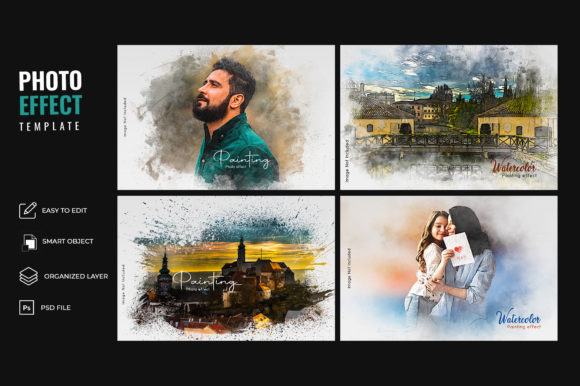
There is a specific magic in the way watercolor pigment bleeds and settles on textured paper. It is organic, unpredictable, and carries a warmth that digital imagery often lacks. Watercolor Splash Photo Effect Templates capture this essence, allowing you to bypass the mess of traditional painting while retaining the authentic aesthetic. These templates are not just filters; they are complex design assets built on layers of paint splatters and textured backgrounds. By utilizing these overlays, you can instantly convert a standard photograph into a piece that looks hand-painted. The visual personality here is artistic, expressive, and tactile. It bridges the gap between photography and illustration, offering a creative font of visual language that speaks to nostalgia and craftsmanship.
The appeal lies in the texture. Digital perfection is easy to achieve, but realistic imperfection is harder. These templates provide that necessary "human touch." The splatters are irregular, the color mixing is subtle, and the paper grain is visible. This style works beautifully for projects that need to feel approachable and genuine. Whether you are a blogger looking to stand out or a marketer aiming to evoke emotion, the watercolor style softens the digital barrier between you and your audience. It transforms a flat image into a dynamic visual story.
Strategic Applications Across Various Projects
For entrepreneurs and small business owners, visual brand identity is paramount. Incorporating watercolor elements into your logo design or marketing materials can set a specific tone. For instance, a boutique bakery or a wellness brand might use these effects to convey softness, nature, and artisanal quality. In packaging design, a watercolor splash can differentiate a product on the shelf, suggesting that the contents are natural or handcrafted. It is a powerful tool for brand perception, signaling creativity and attention to detail without saying a word.
In the realm of editorial design and publishing, these templates serve as excellent chapter openers or feature image backgrounds. They provide a visual hierarchy that draws the eye without overwhelming the text. Similarly, in web design, watercolor headers or backgrounds can break the monotony of standard grids, adding depth and character to a landing page. Social media graphics also benefit immensely. On platforms like Instagram or Pinterest, where visual noise is high, a stylized, artistic image acts as a thumb-stopper. It creates audience engagement because it feels curated and intentional rather than mass-produced.
Practical Guide to Using Watercolor Splash Photo Effect Templates
Using these assets is surprisingly straightforward, even if you are not a designer. The package typically includes PSD files that are organized for ease of use. To create the realistic effect of a watercolor painting, you generally place your image into a designated Smart Object layer. Once you save that layer, the template applies the paint splatters and watercolor paper texture automatically. The result is a unique piece of art generated in just a few seconds. This simplicity allows crafters and hobbyists to produce professional-looking results without mastering complex painting techniques in software like Photoshop.
Evaluating Project Fit and Readability
While these templates are versatile, context matters. You must consider readability and visual hierarchy. If you are placing text over the watercolor effect, ensure there is enough contrast. A busy, multi-colored splash might make white text illegible. In such cases, using the effect as a border or a partial overlay is better than a full background. Think of these templates as a display font—they are meant to grab attention and set the mood, but they shouldn't clutter the message. Just as you wouldn't use a heavy script font for body text, you shouldn't let the watercolor effect overpower the core content of your design.
Pairing and Consistency
Treat these visual effects much like you would treat a premium font. They need to be paired correctly to maintain professionalism. For example, a chaotic watercolor splash pairs well with a clean, modern sans serif font. This contrast creates balance. If your brand uses a traditional serif font, a subtle, muted watercolor effect might work better than a vibrant neon splash. Font pairing and texture pairing follow similar logic: contrast creates interest, while harmony creates unity. Always test your chosen effect with your typography to ensure they complement each other.
Licensing and Final Checks
Before finalizing your design, always review the commercial font and asset licensing. Most professional templates allow for commercial use, but it is vital to verify this, especially for packaging design or merchandise. Check the included styles; the 4 PSD files usually offer different color palettes or splatter densities. Experiment with these variations to see which one best suits the lighting of your original photo. Ultimately, Watercolor Splash Photo Effect Templates are about adding value. They save time, enhance visual storytelling, and provide a consistent way to introduce artistic flair into your digital and print projects.