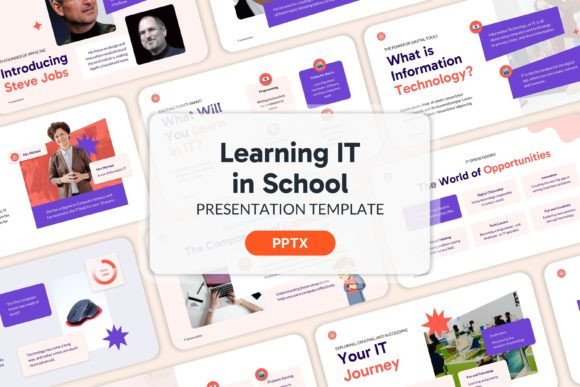
Learning IT in School: Practical PPT Templates for Tech Education
When you're preparing educational materials for an IT course, coding bootcamp, or technology workshop, the presentation template you choose matters more than you might think. The Learning IT in School - PPT Templates collection was built specifically for this kind of work—creating professional, clean presentations that communicate complex technical concepts without overwhelming your audience.
This isn't a flashy, over-designed template with distracting animations and cluttered layouts. It's a purposeful set of 20 slides designed to help educators, trainers, startup founders, and content creators present information clearly. The design philosophy here leans toward structured clarity: organized layouts, consistent color schemes, and logical content flow that mirrors how people actually process information in a learning environment.
What Makes This Template Set Different
The Learning IT in School - Powerpoint Templates collection stands out because it understands its audience. Whether you're a teacher introducing students to network fundamentals, a marketing professional pitching a tech product to business partners, or a small business owner explaining your SaaS platform to potential clients, the template adapts to your needs without requiring design expertise.
Inside the zip file, you'll find a fully organized structure with master slides already configured. This means you can maintain visual consistency across your entire presentation with minimal effort. The color scheme is pre-selected and professional—think clean blues, structured grids, and plenty of white space. There are no stock images included, which is actually a deliberate advantage. You bring your own screenshots, diagrams, team photos, or branded graphics, and the image placeholders make insertion straightforward.
The 20-slide count hits a practical sweet spot. It's enough to cover an introduction, main content sections, supporting data, and a conclusion without encouraging you to pad the presentation with filler. For anyone who's sat through a 60-slide deck that could have been 15, this constraint is genuinely helpful.
Where These Templates Work Best
The applications extend well beyond traditional classroom settings. Here's where I've seen templates like these perform effectively:
- Startup pitch decks targeting investors who need to understand your technology quickly
- Internal training sessions where IT departments onboard new employees on software systems
- Workshop presentations at conferences, meetups, or community events focused on digital skills
- Client-facing proposals from agencies or freelancers explaining technical deliverables
- Course content creation for online learning platforms or educational YouTube channels
- Product demonstrations where you need to walk stakeholders through features and functionality
The design personality here is professional without being corporate-stiff. It communicates competence and preparation—exactly the impression you want when presenting technical material. The visual hierarchy is already built into the layouts, so your key points naturally receive emphasis while supporting details stay organized underneath.
Design Details That Support Communication
Good presentation design isn't about decoration. It's about removing friction between your message and your audience's understanding. The Learning IT in School - PPT Templates accomplish this through several practical design choices.
First, the master slides ensure that fonts, spacing, and element placement remain consistent throughout. When your audience isn't distracted by inconsistent styling, they can focus on what you're actually saying. Second, the image placeholders are sized and positioned to accommodate typical screen captures, diagrams, and photographs used in tech presentations. You won't spend time resizing and repositioning elements to make them look right.
The color scheme works across different projection environments too. Whether you're presenting in a bright conference room or a dimmed auditorium, the contrast ratios hold up. This is a detail that separates thoughtfully designed templates from ones that only look good on your laptop screen.
For anyone building a brand identity around educational content or technology services, consistency across presentations matters. Using the same template family across multiple presentations—adjusting content but maintaining the visual framework—builds recognition with your audience over time.
Getting the Most From Your Template
A few practical recommendations once you download the file:
- Customize the color scheme first. Match it to your brand colors or your institution's palette before adding content. This single step transforms a generic template into something that feels specifically yours.
- Prepare your images in advance. Since the template includes placeholders but no images, gather your screenshots, team photos, and graphics before you start editing. This keeps your workflow efficient.
- Don't use all 20 slides. Just because they're available doesn't mean every presentation needs them all. Select the layouts that serve your specific message and delete the rest.
- Test on your actual presentation display. Fonts and colors can shift between your editing screen and a projector or shared screen. Always do a quick review before presenting.
- Pair with complementary design assets. If you're creating a broader content series—blog posts, social media graphics, handouts—pull the same color palette and visual style from the template into those materials for cohesive branding.
Practical Value for Real-World Projects
What I appreciate about the Learning IT in School - PPT Templates is that they don't try to be everything. They're designed for a specific context—presenting technical and educational content professionally—and they deliver on that promise without unnecessary complexity. The organized file structure means you can find and edit elements quickly. The master slide system means your presentation stays visually coherent even as you add and rearrange content.
For entrepreneurs building a tech startup, this kind of template becomes a reusable asset. Your investor deck, your client onboarding presentation, your conference talk, and your internal team meeting can all share visual DNA while serving different purposes. That consistency reinforces your professionalism every time someone encounters your brand.
For educators and content creators, the template removes the design barrier entirely. You can focus your energy on crafting clear explanations, choosing effective examples, and structuring your curriculum rather than wrestling with slide layouts and font sizes.
The bottom line: if you're working in any space where technology education, product presentation, or professional communication intersects with visual design, having a reliable, well-structured template in your toolkit saves time and elevates your output. The Learning IT in School collection provides exactly that foundation.